
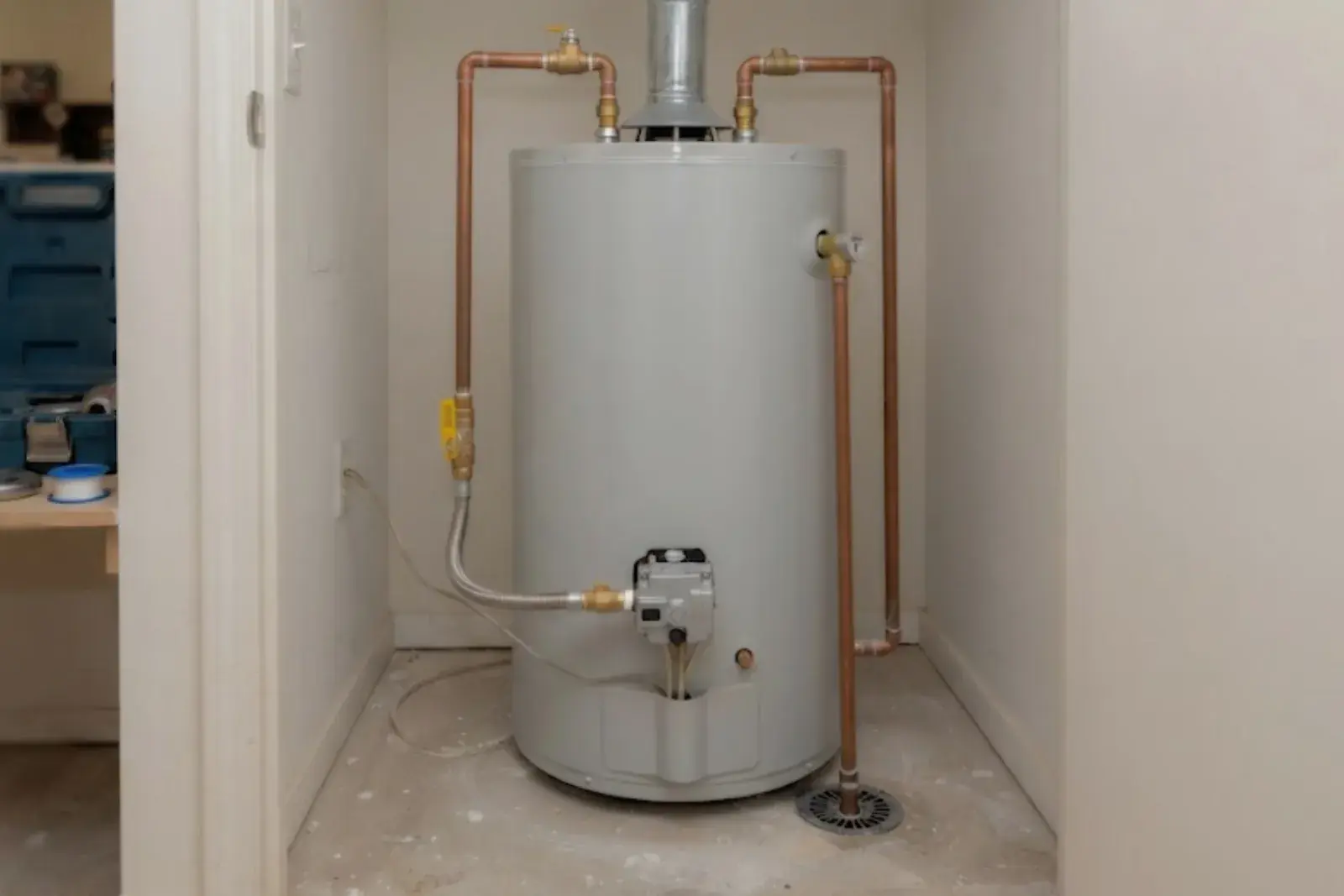
A water heater holds a lot of energy in a small space. A bad installation can leak gas, vent carbon monoxide into the house or overpressure the tank. Most of the safety work is small and cheap when it is done right, and expensive when it is skipped.
This checklist shows what a safe installation includes, so you can check the work or ask the right questions. If you want a plumber to handle it, call (973) 488-5410.
The relief valve and discharge pipe
A temperature and pressure relief valve opens if the tank gets too hot or the pressure climbs too high. It must have a discharge pipe that runs down to a safe location. The pipe should not be capped, plugged or reduced in size.
If the discharge pipe is missing or short, a valve that opens will spray scalding water. We check this on every installation, and we replace valves that are old or corroded.
Venting and combustion air
Gas heaters create exhaust that must leave the house. The vent needs the right size, slope and connections, and the room needs enough air for burning. A vent that is blocked, disconnected or oversized can send carbon monoxide into living space.
Older Montclair homes sometimes vent heaters into old chimneys that were built for boilers. Those flues may be too large, so we check them and discuss a liner when needed.
A safety checklist
| Item | What to check | Why it matters |
|---|---|---|
| Relief valve | Present, correct rating, discharge pipe run down | Prevents overpressure and scalding |
| Gas connection | Sealed, leak tested, shutoff in reach | Prevents gas leaks |
| Venting | Proper size, slope and sealed joints | Prevents carbon monoxide |
| Expansion tank | Installed where needed and set to pressure | Protects the tank |
| Drain pan | Used where leaks would cause damage | Limits water damage |
| Carbon monoxide detector | Working on each floor | Early warning |
Licensing and permits in Montclair
Plumbing work in New Jersey is done by a licensed plumber, and the state plumbing code follows the National Standard Plumbing Code. Many heater installations involve a permit and an inspection, which are handled locally through the construction office. If someone offers to skip the permit, take that as a warning, because an unpermitted install can cause trouble when you sell or file a claim.
After the installation
If you smell gas, leave the house and call the gas utility first. Then call us.
- Know where the gas and water shutoffs are.
- Test the relief valve once a year by lifting the lever briefly.
- Keep the area around the heater clear.
- Replace the carbon monoxide detector batteries.
- Call if you smell gas or see soot near the vent.
Gas smell and carbon monoxide
The smell of gas, a hissing sound near the heater or a pilot that keeps going out are all reasons to stop. Leave the house, call the gas utility from outside and do not use switches or phones inside. Once the utility clears the building, call us.
Carbon monoxide has no smell. Detectors are the only warning, so keep working ones on each level and near sleeping areas. Symptoms such as headaches and dizziness that ease when you leave the house are a reason to call 911.
Signs of a poor installation
If you see any of these, have a licensed plumber check the installation. The fixes are usually small, and the risks of ignoring them are not.
- A relief valve with no discharge pipe or a pipe that is capped.
- A vent pipe that slopes down or has loose joints.
- No shutoff valve within reach on the gas or water line.
- Scorch marks or soot near the draft hood.
- A heater sitting on a surface that is not level or is in standing water.
Permits and inspections
Replacing a water heater usually needs a permit in New Jersey, and gas or electrical work may need an inspection. A permit protects you, because it means someone other than the installer checks the work. Ask who pulls it before the job starts.
Keep the permit paperwork and the manual with your home records. They help with insurance and with selling the house.
Yearly safety checks you can do
Lift the relief valve lever briefly to be sure it flows and reseats. Look for rust at the base and water on the floor. Check that nothing flammable is stored near the heater.
Flush a few gallons from the drain valve to clear sediment. If the water runs rusty or the tank hums loudly, ask a plumber to look at it.
Codes and standards behind the work
Gas water heaters are listed to ANSI Z21.10.1 and installed under the National Fuel Gas Code (NFPA 54), and every tank needs a temperature and pressure relief valve with a discharge pipe.
Next steps
See water heater installation for how we handle the work. We serve Montclair and Glen Ridge, and the service area page lists the other towns.
Installation safety questions
Many installations involve a permit and inspection through the local construction office. Your plumber confirms what applies.
Gas connections and venting are safety critical. We recommend a licensed plumber.
An old chimney may need a liner for a modern heater. A plumber checks the size and condition.
It can signal high pressure or a worn valve. Have it checked.
Many closed systems need one. We check your pressure and recommend it when needed.