
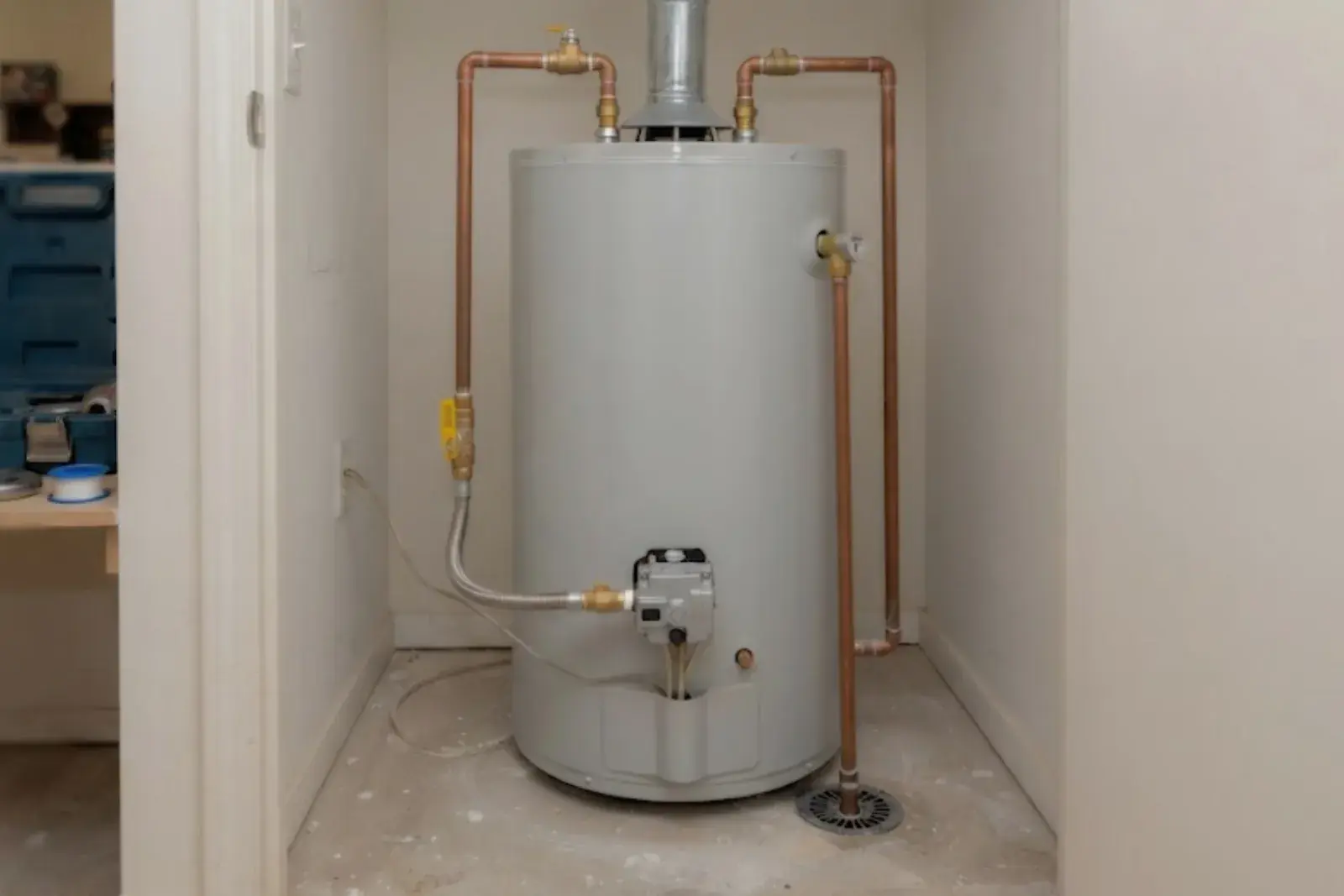
What a proper installation includes
A safe installation covers more than the tank itself. The relief valve and its discharge pipe, the shutoff valves, the expansion control and the venting or electrical supply all have to be right. Skipping any of them is how heaters end up leaking, short cycling or venting poorly.
We walk through each connection with you before we leave and check the unit under load. You should know where the shutoffs are and what normal operation sounds like.
Choosing between gas, electric and hybrid
Fuel decides most of the other choices. Gas heaters recover quickly and suit homes with gas service, while electric units are simpler to install where gas is not available. Hybrids use less electricity but need space and clearance around the unit.
If you are replacing an existing heater, the easiest installation keeps the same fuel and footprint. If you are changing fuel, we plan for the venting, gas line or electrical circuit that the new unit requires.
| Question | Why it matters |
|---|---|
| What fuel do you have? | It sets venting, piping and circuit requirements |
| How much space is there? | Clearances affect which models fit and how they are serviced |
| How many people use hot water at once? | It sets tank size and recovery needs |
| Is the basement damp? | Dampness shortens the life of the unit and affects where it sits |
Safety details that matter in older Montclair basements
Many Montclair homes have a heater in a basement beside an old boiler or chimney, and that setup can affect venting. Gas heaters need a proper path for combustion gases, and a chimney that once served an old boiler may be oversized for a modern heater. When the flue does not fit, we discuss a liner or a different venting approach.
We also check the combustion air, the clearances around the unit and the condition of the gas connection. New Jersey plumbing work is done by a licensed plumber, and a permit and inspection are part of many installations. We handle that process with you so there are no surprises.
Installation day, step by step
- Walk the site. We confirm the location, access, fuel and venting before the old unit is touched.
- Shut off and drain. Supply and power or gas are shut off, and the tank is drained to a safe location.
- Set the new unit. The heater is placed level, with a drain pan where the location calls for one.
- Connect and test. Water, gas or power, venting and relief valve are connected and checked before we leave.
What affects the price of installation
The price follows the work involved, not just the heater model.
- Heater type, size and efficiency.
- Changes to venting, gas piping or electrical service.
- Condition of existing valves and supply lines.
- Permit and inspection requirements.
- Removal and disposal of the old unit.
Insurance rarely covers a planned installation. Some utilities or manufacturers offer rebates on efficient models, so ask before you buy. Call (973) 488-5410 and we will give you a price based on your home.
Matching the heater to Montclair homes
Larger older homes in Upper Montclair and near Mountainside Park often have several bathrooms and heavy morning demand. A single small tank may leave the last shower cold. Condos and smaller houses near Bloomfield Avenue and Watchung Plaza usually need less capacity and benefit from a compact unit that fits a closet.
We size the unit around the household, then explain the trade-offs between a larger tank, a hybrid and a tankless unit. If your existing heater is failing now, see water heater replacement for the urgent path.
Codes and standards behind the work
Installation follows the International Plumbing Code, the National Fuel Gas Code (NFPA 54) for gas units and the manufacturer instructions, with a permit under the New Jersey Uniform Construction Code.
Where we install
We install heaters in Montclair, including Upper Montclair, South End and Frog Hollow, and in Glen Ridge, Verona, Cedar Grove and Bloomfield. If you already have a heater that is acting up, water heater repair may be all you need.
Water Heater Installation questions from Montclair homeowners
A standard swap is often completed in one day. Changes to venting, fuel or location add time, and we give you the schedule up front.
Many installations involve a permit and an inspection through the local construction office. We explain what applies to your job and handle the process.
Often yes. We check clearances and venting before choosing a model and tell you honestly if a different location works better.
It absorbs the pressure rise when water heats. Many systems need one, and we check yours during installation.
Yes. Removal and disposal of the old unit are part of the job.
Yes. Landlords can call (973) 488-5410 to schedule work and ask about access and timing with tenants.