
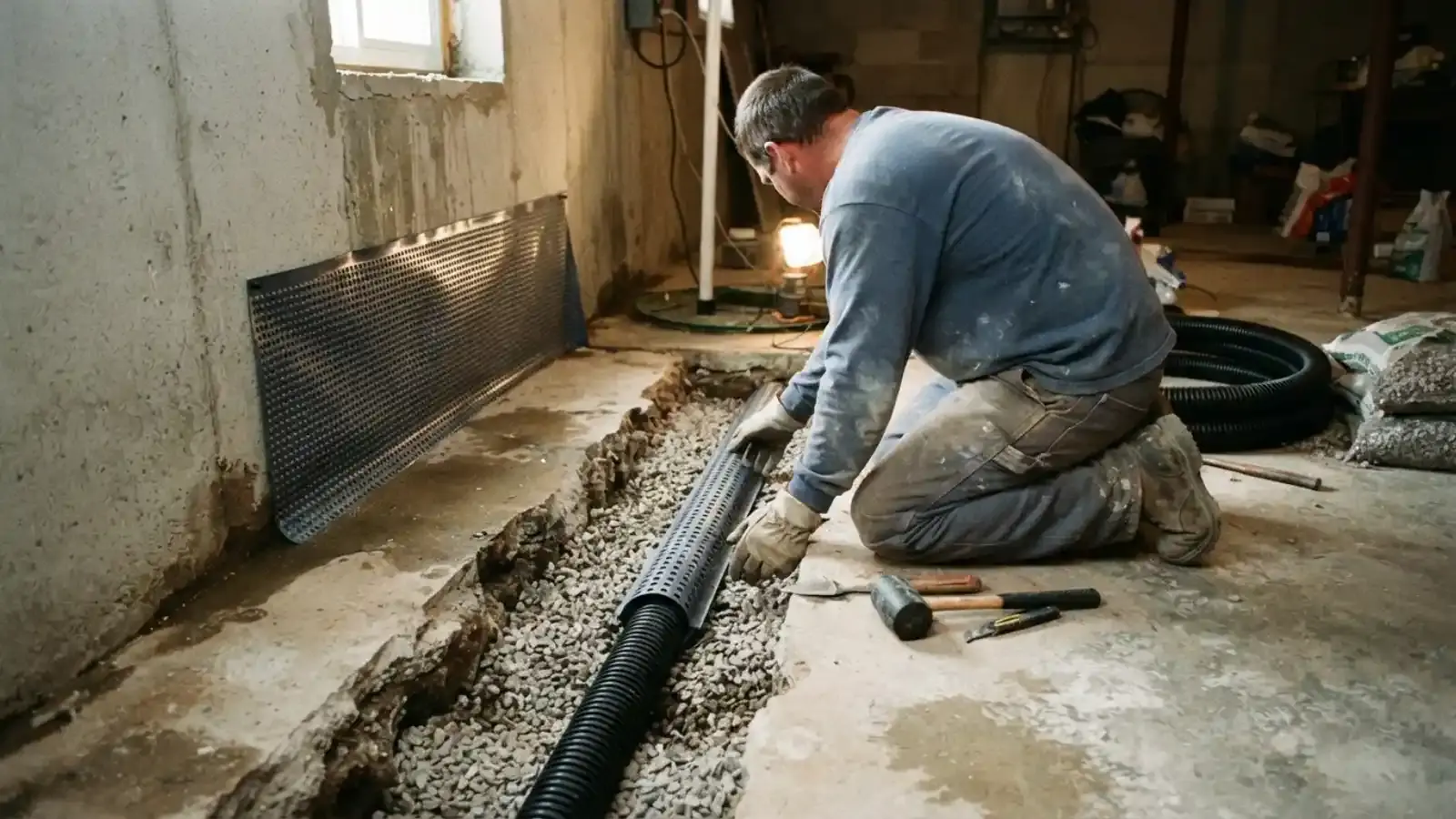
No carpet is truly waterproof where it matters. Some fibers shed water, and some backings resist moisture, but a carpet laid over a wet slab traps water and grows mold underneath. The first step in finishing a basement floor is to make sure the basement stays dry, and the carpet choice comes second.
This guide explains the options, how to test your floor and what a plumber can fix first. If you have water in the basement now, call (973) 488-5410 before you buy anything.
Test the floor before you buy
Tape a square of clear plastic to the slab and leave it for two days. If condensation forms under the plastic, moisture is coming through. Also look for white powdery deposits on the wall, which show that water is moving through the masonry.
Check after a heavy rain too. A floor that is dry in August can be wet in March.
Carpet and flooring options below grade
If you want carpet, choose tiles that can be lifted and dried. Avoid padded wall to wall carpet unless the floor has been dry for years.
| Option | How it handles moisture | Notes |
|---|---|---|
| Synthetic carpet tiles | Individual tiles can be dried or replaced | A practical choice for basements that sometimes get damp |
| Indoor outdoor carpet | Fibers resist moisture, backing varies | Good for utility areas |
| Wall to wall carpet with pad | Holds water in pad and backing | Not advised below grade without a dry floor |
| Luxury vinyl plank or tile | Handles moisture and is easy to dry | Often preferred in wet prone basements |
Fix the water first
Water enters basements in a few ways. Groundwater pushes through the floor and wall joints. Surface water pools against the foundation. Plumbing failures, like a leaking pipe or a sewer backup, add water too. Each needs a different fix.
Our basement waterproofing work covers interior drains and sump systems, and our leak detection team finds hidden leaks. If water entered in a storm, a sump pump with a battery backup is the usual first step.
Basements and storms in Montclair
In early September 2021 the remnants of Hurricane Ida flooded basements across northern New Jersey. Montclair homeowners were among those who lost finished space. The lesson is practical. If your basement has taken on water, assume it will again, and choose flooring that survives a wet day.
A sensible plan
- Test the slab and the walls for moisture.
- Fix the water source with drains, a pump and leak repair.
- Choose flooring you can dry or replace by the tile.
- Keep valuables off the floor and raise stored boxes.
Moisture, mold and what to watch
Mold needs moisture and time. A basement carpet that stays damp for more than a day or two can start to grow it, and the pad underneath holds water long after the surface dries. A musty smell, dark spots or a floor that feels cool and damp are early warnings.
If you see mold, the cause is moisture, so fix that first. Cleaning the surface without drying the floor and the walls lets it return within weeks.
Planning the room
Raise furniture on legs, keep stored boxes on shelves and leave a gap at the wall for air. Run a dehumidifier in humid months. These steps do not replace drainage, but they make an occasional wet day easier to recover from.
If you are finishing the basement, plan for access to the sump pit, the main shutoff and the cleanout. Sealing them behind a wall makes the next plumbing repair far more expensive.
Options other than carpet
Vinyl plank, tile and sealed concrete tolerate moisture better than carpet. Carpet tiles let you lift and replace one square after a spill. Each option works only if water stays out of the room, so drainage and grading come before the floor.
If you love the feel of carpet, use an area rug over a hard floor. It can be lifted and dried when a wet day comes.
Fix the water first
Floor choice does not solve seepage. Check gutters, downspout extensions, grading near the foundation and the sump pump before you spend on finishes. A pit that runs often is telling you the water table is high.
See basement waterproofing if the walls or floor show moisture, and sump pump repair if the pump is old or noisy.
Drying out after a spill
Move quickly. Lift furniture, pull back wet carpet and run fans and a dehumidifier for several days. Throw away padding that stays wet, because it holds moisture against the floor and grows mold.
If water came from a pipe, shut off the supply first and call a plumber to find the source.
Codes and standards behind the work
The U.S. Environmental Protection Agency advises keeping indoor relative humidity below 60 percent and drying wet materials within 24 to 48 hours to limit mold growth.
Where to call
We serve Montclair and Glen Ridge, and the service area page lists the other towns.
Basement carpet questions
Yes if the floor is dry. Carpet tiles are a safer choice than padded wall to wall carpet.
Some carpets resist water, but none stop moisture from rising through a wet slab.
Tape clear plastic to the slab for two days and check for condensation.
It helps with humidity, but it will not stop liquid water entering the basement.
Many basements across northern New Jersey took on water in September 2021. If yours did, plan flooring and drainage with that in mind.