
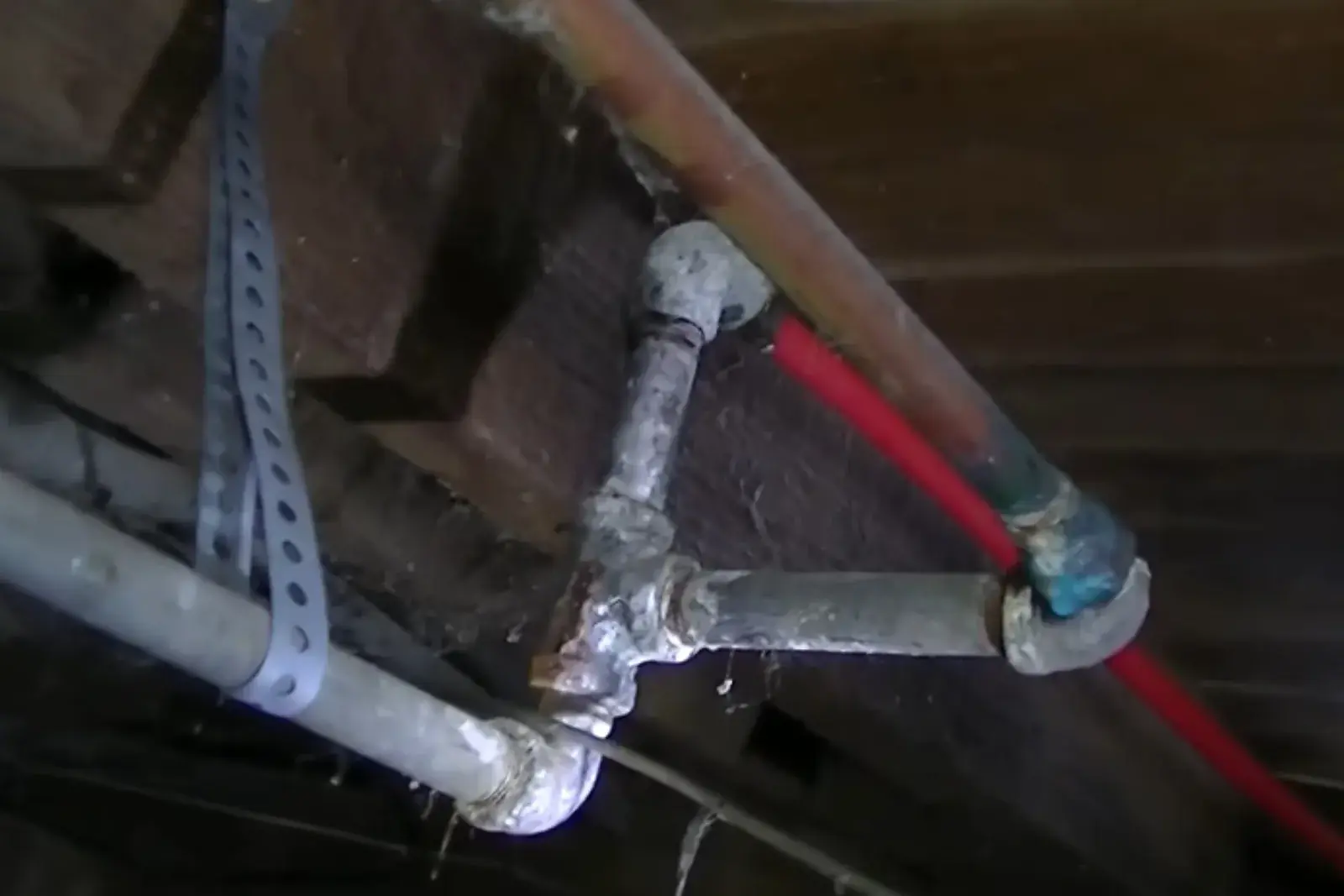
When repiping makes sense
A single leak does not mean the house needs repiping. A pattern of leaks does, especially when the pipe is the same age and material throughout. Pinholes, low pressure, discolored water and repeated repairs in different spots point to failure across the system.
We assess the pipes, show you what we find and tell you whether spot repairs will hold or whether replacement is the better value.
Signs your supply pipes are failing
Galvanized steel corrodes from the inside and narrows over time, which is why pressure drops long before pipes leak. Lead pipes and lead solder are a health concern and are a reason to plan a replacement.
- Brown or rusty water, especially in the morning.
- Low pressure that has built over years.
- Repeated pinhole leaks.
- Green or white mineral crust on visible pipe.
- Galvanized or lead pipe in an older home.
PEX versus copper
Both are good choices when installed well. We explain the trade-offs and let you decide.
| Factor | PEX | Copper |
|---|---|---|
| Installation | Flexible, fewer fittings, often less demolition | Rigid, soldered joints, more labor |
| Cost | Often lower | Often higher |
| Longevity | Long, with proper installation | Long, proven record |
| Water quality concerns | Some prefer to avoid plastic | Metal, some prefer it |
| Freeze behavior | Tolerates freezing better than rigid pipe | Can split when frozen |
How a repipe project runs
Drywall repair is a separate trade, and we coordinate with you on how far the work should go.
- Assessment. We trace the supply lines, test pressure and look for failing materials.
- Plan and price. We map the routes, plan the openings and give you a written price.
- Replace. New lines go in room by room, with water restored at the end of each day when possible.
- Test and close up. We pressure test the system before the walls are closed.
What affects the price of repiping
Repiping is priced to the house, since no two layouts are alike.
- Size of the house and number of bathrooms.
- Pipe material chosen.
- Access through basements, crawlspaces and walls.
- Fixtures that need new valves or connections.
- Permits, inspection and any wall repair.
Homeowners insurance generally treats gradual pipe failure as maintenance. Sudden water damage is different, so ask your carrier. Call (973) 488-5410 and we will give you a written quote after an assessment.
Older Montclair homes and their pipes
Supply pipe varies from house to house, and older homes may still have galvanized steel, lead or a mix of repairs in copper and plastic. New Jersey now requires water systems to replace lead service lines, which is a reason to know what pipe runs between the street and your meter.
If your house has lead or galvanized pipe inside, repiping solves several problems at once. We help you plan it with an eye on cost, disruption and the work already done.
Codes and standards behind the work
New supply lines must meet the International Plumbing Code and carry NSF/ANSI 61 marking for drinking water, and a repipe needs a permit under the New Jersey Uniform Construction Code.
Safety steps before and during a repipe
A planned repipe goes smoothly when these points are settled in advance. Call (973) 488-5410 to talk through your house.
- Know where the main water shutoff is and test that it closes.
- Do not cut into walls near wiring or gas lines.
- Keep children and pets out of work areas.
- Ask whether old pipe or insulation could contain asbestos before it is disturbed.
- Document the old pipe with photos for your records.
Repiping across Montclair and nearby towns
We repipe homes in Montclair, Glen Ridge, Verona, Cedar Grove and Bloomfield. For a pipe that has already burst, see burst pipe repair, and for the line from the street, see water line repair.
Repiping questions from Montclair homeowners
Repeated leaks, low pressure, discolored water and old galvanized or lead pipe are the main signs. An assessment gives a firm answer.
Many homes take several days, depending on size and access. We give you a schedule with the written price.
It involves some openings, and PEX often needs fewer than rigid pipe. We plan routes to limit the damage.
It can be a health concern, especially for children and pregnant women. We recommend replacement and testing your water.
Yes. Partial repiping can be sensible when only one section is failing, and we explain the trade-offs.
Repiping usually involves a permit and inspection. We explain what applies and handle the process.