
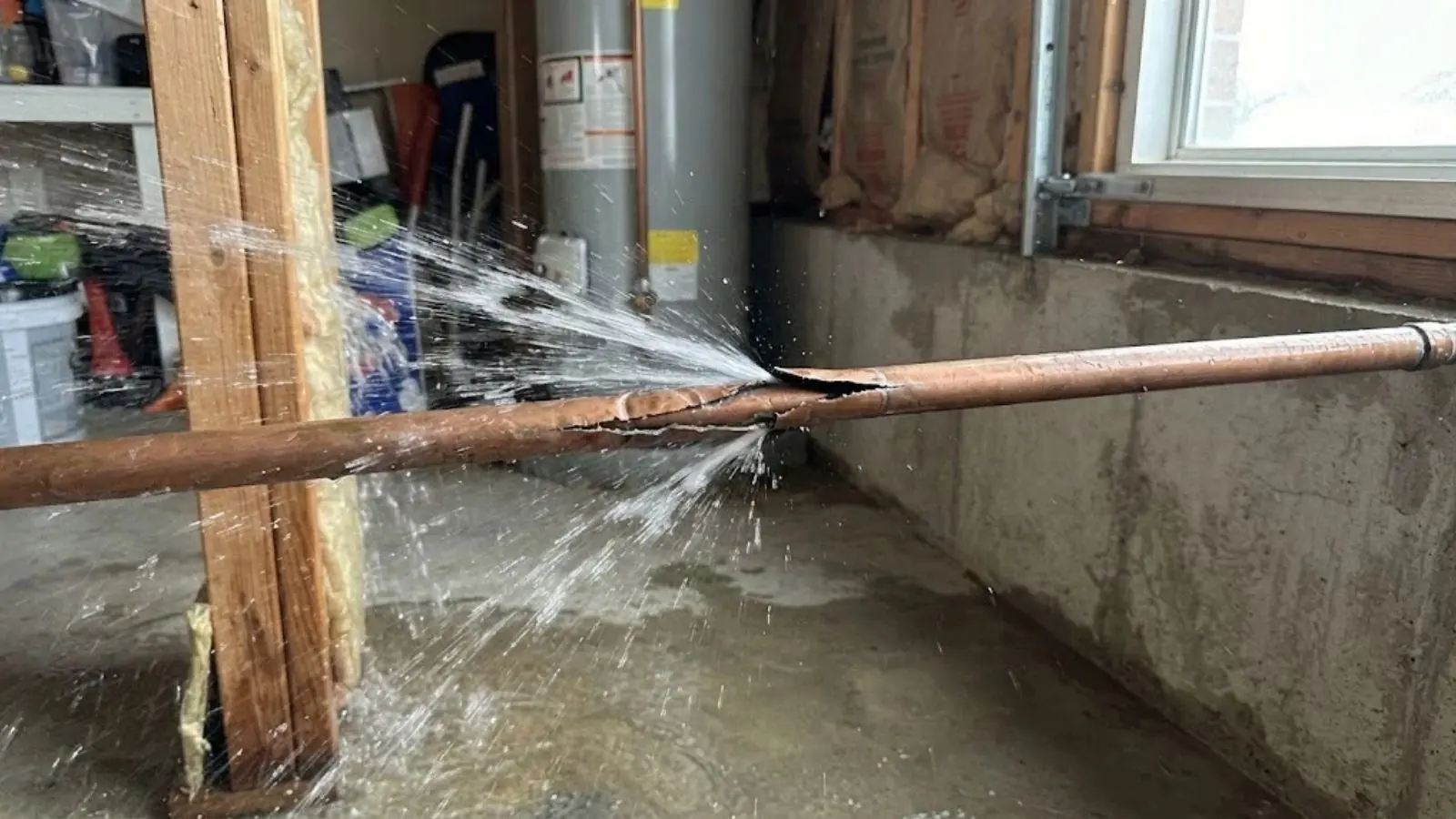
Water expands when it freezes, and a frozen pipe can split along its length. The split often shows only when the ice thaws and water pours out. The best time to protect pipes is before the first hard freeze, and the second best is the moment you notice that a faucet has stopped running.
This guide covers where pipes freeze, what to do beforehand and how to thaw one safely. If a pipe has burst, shut off the main and call (973) 488-5410.
Where pipes freeze
Pipes in unheated spaces and along exterior walls are the usual victims. That includes basements with drafty windows, crawlspaces, garages, attics and kitchens on outside walls. Outdoor hose bibs freeze when a hose is left attached, and the ice can travel back into the house pipe.
Before the cold arrives
- Disconnect hoses and shut off the outdoor faucet from inside if there is a shutoff.
- Insulate pipes in basements, crawlspaces and garages.
- Seal drafts near pipes with caulk or foam.
- Open cabinet doors under sinks on exterior walls during cold nights.
- Let a faucet drip when a hard freeze is forecast.
- Keep the heat on and set above 55 degrees if you are away.
How to thaw a frozen pipe safely
Never use an open flame or a torch. It can ignite framing and damage the pipe.
- Open the faucet. Water needs a path to escape as the ice melts.
- Find the frozen section. Look for frost or a pipe that is cold to the touch near an exterior wall.
- Apply gentle heat. Use a hair dryer or warm towels, working from the faucet toward the frozen area.
- Watch for leaks. When the water flows, check the pipe for cracks.
- Call if you cannot reach it. A pipe in a wall or under a slab needs a plumber.
What to do if it burst
Shut off the main water valve immediately. Open a faucet at the lowest point to drain the pipes, and switch off power to wet areas if you can reach the panel safely. Take photos for your insurer and call (973) 488-5410.
Our burst pipe repair page walks through the first ten minutes in detail, and our leak detection team can check for hidden damage after a thaw.
Older Montclair houses and winter
Cold snaps in Essex County can last several days, and older Montclair houses often have additions or kitchens on exterior walls where pipes run through cold spaces. If you have a room that is over a garage or a porch, check the pipes under it. A frozen pipe in a basement ceiling or an exterior wall is a common call after a hard freeze.
Signs a pipe is frozen
The first sign is usually a faucet that gives only a trickle or no water. Frost on the outside of an exposed pipe, a bulge in the pipe or an odd smell from a drain can also be signs. If only one faucet is affected, the freeze is in the line to that fixture. If the whole house has no water, the freeze may be in the main near the entry point.
Do not wait for the thaw to find out. Open the faucet, start warming the pipe and be ready to shut off the main if water appears.
Leaving the house in winter
Pipes freeze more easily when a house is empty and the heat is low. If you will be away, keep the thermostat at a safe setting and ask someone to check the house. Shutting off the main and draining the system is another option for long absences.
If the power goes out in a cold snap, open cabinet doors, let faucets drip and consider draining exposed lines. A burst pipe in an empty house can run for hours before anyone notices.
Where pipes freeze first in older houses
Pipes in exterior walls, unheated crawl spaces, garages and basements with leaky rim joists are the usual victims. Kitchen and bathroom lines on a north wall are common too. Cold air finds gaps around where pipes enter the house, so sealing those gaps with caulk or foam helps as much as wrapping the pipe.
Walk the house in the fall and feel for drafts near pipes. A draft that you can feel in October is a freeze risk in January.
What to do if a pipe has already burst
Shut off the main valve at once and open the lowest tap to drain the line. Switch off power to any wet area before you touch anything electrical. Take photos of the damage for insurance, then call a plumber.
Do not use a torch or open flame to thaw a pipe. Heat applied unevenly can crack the pipe or start a fire inside the wall. See burst pipe repair for what we do on emergency calls.
Codes and standards behind the work
the International Plumbing Code requires water lines to be protected from freezing where they run through unheated spaces, which is why insulation and sealing gaps matter.
Where to call
We respond to frozen and burst pipes across Montclair and in Glen Ridge. The service area page lists the towns we serve.
Frozen pipe questions
Pipes in unheated spaces can freeze when temperatures stay below freezing for several hours. Wind and drafts speed it up.
A slow drip keeps water moving and can help during a hard freeze.
Yes, but check it for splits once water flows.
Some homeowners policies cover sudden water damage. Contact your carrier and keep photos.
Older houses with additions and exterior wall kitchens often have pipes in cold spaces, which raises the risk.