
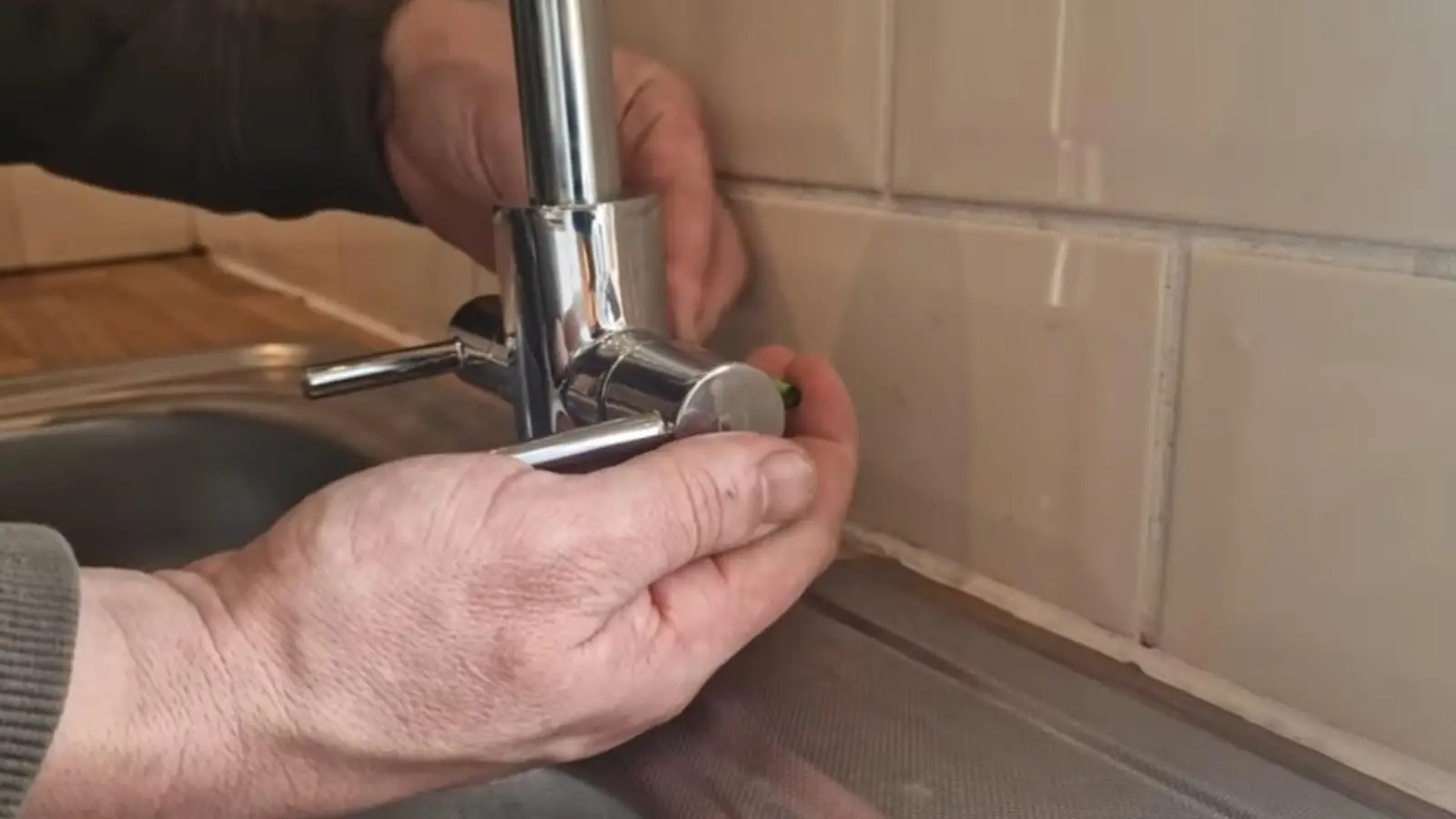
A leaking faucet is almost always a worn part, and the part depends on where the water appears. A drip from the spout points to the cartridge or washer. A leak at the base or handle points to an O-ring or a loose fitting. Finding the exact spot is half the repair.
This guide shows how to read the leak and decide between a repair and a new faucet. If you would rather have a plumber do it, call (973) 488-5410.
Where the leak is coming from
| Where it leaks | Likely part | What to do |
|---|---|---|
| Spout drip when closed | Cartridge, washer or seat | Replace the cartridge or washer |
| Base of the spout | O-ring | Replace the O-rings |
| Under the handle | Cartridge seal or packing | Replace the seal |
| Under the sink | Supply line or shutoff valve | Tighten or replace the line |
| Weak stream | Aerator clogged | Clean the aerator |
A basic repair, step by step
Take the old part to the store so the new one matches. Cartridges look alike and are not interchangeable.
- Shut off the water. Use the stops under the sink and open the faucet to drain it.
- Remove the handle. Pop the cap and take out the screw.
- Pull the cartridge. Note how it sits, then lift it out.
- Replace and reassemble. Install the same cartridge and put it back together in order.
Repair or replace
If the faucet is in good shape, a new cartridge is a cheap fix. A faucet with a damaged finish, a cracked body or parts that cannot be found is better replaced. Our faucet repair page explains how we decide.
Mineral buildup and Montclair water
Mineral buildup wears faucet parts and clogs aerators. Montclair publishes an annual water quality report that lists hardness, so you can see what your fixtures face. If the number is high, plan to clean aerators regularly and replace cartridges sooner.
Do not ignore the supply lines
While you have the cabinet open, check the shutoff valves and supply lines. Old valves seize and old braided lines split. If you see corrosion or damp, call us and we will check for a hidden leak with leak detection.
Common faucet types
Faucets have four main designs. Compression faucets have two handles and rubber washers. Cartridge faucets have a replaceable cylinder inside. Ball faucets have a rotating ball with springs and seals. Ceramic disc faucets have two ceramic plates that slide against each other.
The type decides the part you need, and most faucets give a clue in the way the handle moves. A single handle that swings suggests a cartridge or a ball, and two handles that screw down suggest compression.
Parts and tools you will need
Keep the old parts together and bring them to the store. If the new one is a different length or shape, it will not seal.
- An adjustable wrench and screwdrivers.
- A hex key set for set screws under the handle.
- Replacement cartridge, washer or O-ring that matches your faucet.
- Plumber grease for new seals.
- A towel or bucket to catch water in the cabinet.
Step by step: replacing a cartridge
Shut off the supply valves under the sink, then open the faucet to release pressure. Pry off the handle cap, remove the screw and lift the handle away. Unscrew the retaining nut or clip and pull the old cartridge straight out, noting how it sits so the new one goes in the same way.
Press the new cartridge in, tighten the nut by hand and then a little with a wrench. Turn the water back on slowly with the faucet open, check for drips and move the handle through its full range.
Leaks that are not at the spout
A drip at the base of the faucet usually means a worn O-ring. Water under the sink may come from supply hoses, the drain connection or a cracked sink rather than the faucet. Dry everything with a towel and watch where the first drop forms before buying parts.
If a stained cabinet floor or a musty smell shows the leak has run for a while, check the wood. Soft or swollen panels mean moisture has been getting in, and that deserves a closer look than a new washer.
When to call a plumber instead
Corroded shutoff valves that will not close, a faucet that is seized to the sink or a leak that returns after a new cartridge are good reasons to call. So is any job where you cannot stop the water. A stuck valve forced the wrong way can turn a drip into a flood.
Call (973) 488-5410 and tell us the faucet type and where the water appears. We will say what the repair involves and what it should cost before we start. See faucet repair for the full service.
Codes and standards behind the work
Faucets sold in the United States carry flow and lead content limits set by federal rules and by the ASME A112.18.1 standard, so replacement parts should come from the maker or a trusted match.
Where to call
We repair faucets across Montclair and in Glen Ridge. The service area page lists nearby towns.
Faucet leak questions
A worn cartridge, washer or seat is not sealing. Replace the part.
It adds up over a month, and it wears the fixture. Fix it sooner than later.
Usually by replacing the O-rings or tightening the fitting.
Mineral content can build up on parts. Check the township water quality report for hardness.
When you cannot shut off the stops, the part does not match or the leak continues after repair.